Important NoteThis entire repo was AI created - including all of the data within. The intent was to A) help me with my personal electronics inventory; and B) see how I could use AI to make that process a bit easier. DO NOT TRUST!
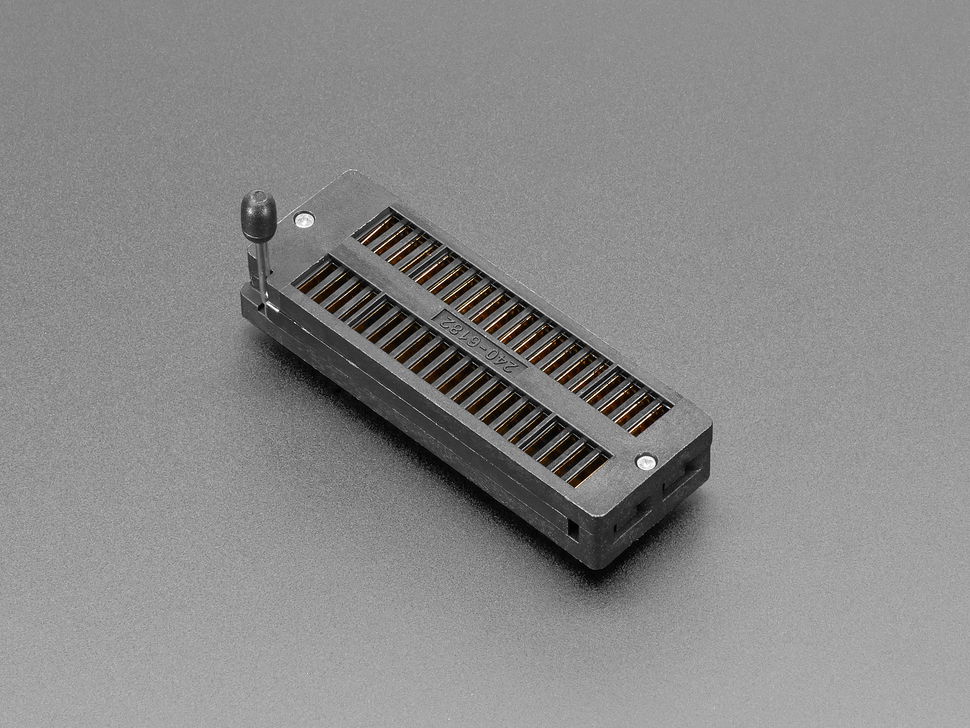
Adafruit 40-PIN ZIF Socket
Details
- Location: Cabinet-5, Bin 22
- Category: Connectors & Hardware
- Brand: Adafruit Industries LLC
- Part Number: 383
- Model: 40-PIN ZIF SOCKET
- Package: DIP Socket
- Quantity: 3 sockets
- Status: Available
- Price Range: $4.00 each
- DigiKey: 1528-2586-ND
- Product URL: https://www.digikey.com/en/products/detail/adafruit-industries-llc/383/8687218
Description
The Adafruit 40-pin ZIF (Zero Insertion Force) socket is a high-quality IC socket designed for easy insertion and removal of 40-pin DIP (Dual In-line Package) integrated circuits. The ZIF mechanism allows ICs to be inserted without force and secured with a simple lever action, preventing damage to delicate IC pins during prototyping and development work. Gold-plated contacts ensure reliable electrical connections and long service life.
Specifications
Physical Characteristics
- Pin Configuration: 40 pins (2 x 20 arrangement)
- Package Type: DIP (Dual In-line Package)
- Pin Spacing: 0.6” (15.24mm) between rows
- Pin Pitch: 0.1” (2.54mm) standard spacing
- Mounting Type: Through-hole
- Socket Type: ZIF (Zero Insertion Force)
Electrical Characteristics
- Contact Material: Gold-plated for corrosion resistance
- Contact Resistance: Low resistance for reliable connections
- Insulation Resistance: High insulation between pins
- Operating Temperature: Standard operating range
- Voltage Rating: Suitable for standard logic voltages
Mechanical Features
- ZIF Mechanism: Lever-actuated clamping system
- Insertion Force: Zero force insertion when lever is open
- Retention Force: Secure clamping when lever is closed
- Cycle Life: High cycle count for repeated use
- Pin Protection: Prevents damage during insertion/removal
Image
Applications
Common use cases for 40-pin ZIF sockets:
- Microcontroller Development: Easy swapping of microcontroller chips during development
- EPROM/EEPROM Programming: Frequent insertion/removal for memory programming
- IC Testing: Testing multiple ICs without pin damage
- Prototype Development: Flexible IC placement during circuit development
- Educational Projects: Safe IC handling for learning environments
- Production Testing: Automated testing systems requiring frequent IC changes
- Repair Work: Temporary IC placement for troubleshooting
- Legacy System Maintenance: Replacement of failed ICs in older equipment
Compatible IC Types
Microcontrollers
- 8-bit Microcontrollers: 8051, PIC, AVR in 40-pin DIP packages
- Vintage Processors: Z80, 6502, 8080 processors
- Development Boards: Microcontroller modules in DIP format
Memory Devices
- EPROM: 27C256, 27C512 and similar erasable memory
- EEPROM: 28C256, 28C64 and similar electrically erasable memory
- SRAM: Static RAM devices in 40-pin packages
- Flash Memory: Flash memory devices in DIP format
Logic Devices
- Programmable Logic: GAL, PAL devices in 40-pin packages
- Custom Logic: ASIC and custom logic devices
- Interface Chips: UART, parallel port, and communication ICs
ZIF Socket Operation
Insertion Procedure
- Open Lever: Lift the ZIF lever to open position
- Insert IC: Place IC into socket with no force required
- Align Pins: Ensure all pins are properly aligned in socket
- Close Lever: Lower lever to clamp IC securely in place
- Verify Connection: Check that IC is fully seated and secure
Removal Procedure
- Open Lever: Lift the ZIF lever to release clamping force
- Remove IC: Lift IC straight up from socket
- Inspect Pins: Check IC pins for damage or bending
- Clean Socket: Remove any debris from socket contacts
- Close Lever: Lower lever to protect socket contacts
Design Considerations
PCB Layout
- Footprint: Standard 40-pin DIP footprint
- Clearance: Adequate clearance for lever operation
- Height: Consider socket height in enclosure design
- Orientation: Clear pin 1 marking for proper IC orientation
Electrical Design
- Signal Integrity: Short traces to minimize signal degradation
- Power Distribution: Adequate power and ground connections
- Decoupling: Proper decoupling capacitor placement
- EMI Considerations: Shielding if required for sensitive applications
Advantages of ZIF Sockets
Protection Benefits
- Pin Protection: Prevents IC pin damage during insertion/removal
- Reduced Stress: No mechanical stress on IC package
- Consistent Contact: Reliable electrical connections
- Long Life: Extended IC and socket life through gentle handling
Development Benefits
- Rapid Prototyping: Quick IC swapping during development
- Testing Flexibility: Easy testing of multiple IC variants
- Programming Convenience: Simplified EPROM/EEPROM programming
- Debugging Aid: Easy IC replacement during troubleshooting
Maintenance and Care
Socket Maintenance
- Regular Cleaning: Clean contacts with appropriate solvents
- Lever Operation: Exercise lever periodically to maintain smooth operation
- Visual Inspection: Check for bent or damaged contacts
- Replacement: Replace socket if contacts become worn or damaged
IC Handling
- ESD Protection: Use proper ESD precautions when handling ICs
- Pin Inspection: Check IC pins before insertion
- Proper Storage: Store ICs in anti-static containers
- Gentle Handling: Avoid excessive force during insertion/removal
Troubleshooting
Common Issues
- Poor Contact: Clean socket contacts and IC pins
- Lever Problems: Check for debris in lever mechanism
- Pin Misalignment: Ensure proper IC orientation and alignment
- Intermittent Connection: Inspect for bent or damaged contacts
Testing Procedures
- Continuity Test: Verify electrical continuity through socket
- Resistance Check: Measure contact resistance
- Mechanical Test: Verify smooth lever operation
- Visual Inspection: Check for physical damage or wear
Safety Considerations
- ESD Protection: Use proper ESD precautions during handling
- Mechanical Safety: Avoid excessive force on lever mechanism
- Electrical Safety: Observe voltage and current ratings
- Proper Orientation: Ensure correct IC orientation to prevent damage
Tags
adafruit, zif-socket, 40-pin, dip, zero-insertion-force, gold-contacts, prototyping cabinet-5 bin-22 status-available
Notes
This Adafruit 40-pin ZIF socket is an essential tool for electronics development and prototyping. The zero insertion force mechanism protects valuable ICs from pin damage while providing reliable electrical connections. The gold-plated contacts ensure long-term reliability and low contact resistance. Having 3 sockets provides flexibility for multiple projects and ensures availability for critical development work. The high-quality construction and reliable operation make these sockets suitable for both hobby and professional applications.