Important NoteThis entire repo was AI created - including all of the data within. The intent was to A) help me with my personal electronics inventory; and B) see how I could use AI to make that process a bit easier. DO NOT TRUST!
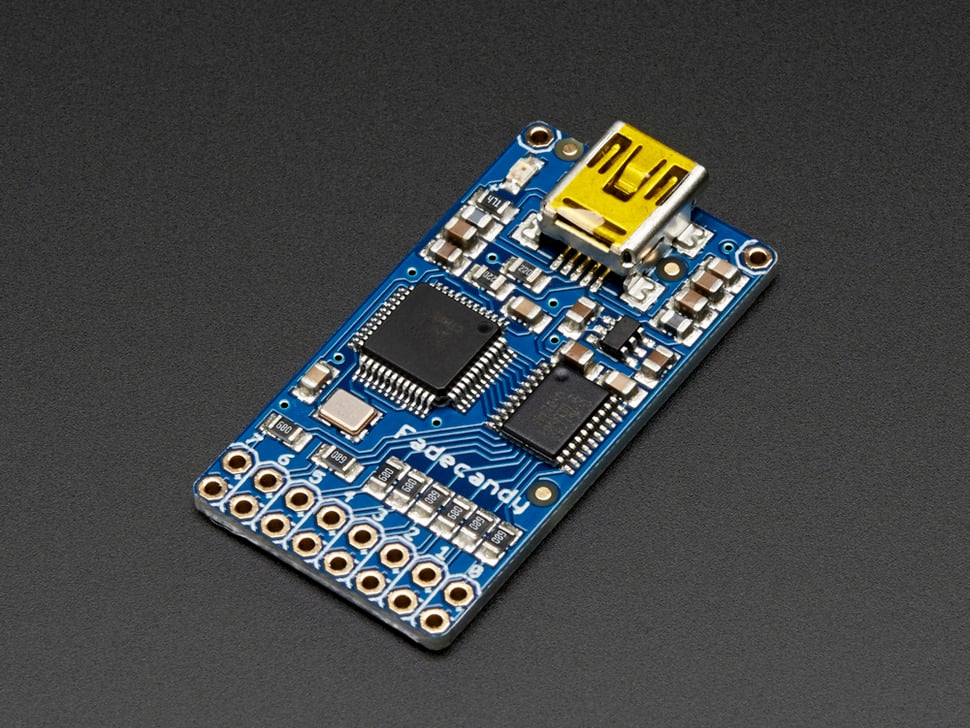
FadeCandy - Dithering USB-Controlled Driver for RGB NeoPixels
Details
- Location: Cabinet-1, Bin 28
- Category: Microcontroller Boards
- Type: USB LED Controller
- Brand: Adafruit (collaboration with Scanlime)
- Part Number: 1689
- Quantity: 1
- Product URL: https://www.adafruit.com/product/1689
Description
USB-controlled LED driver featuring advanced dithering and color correction algorithms for high-quality LED art projects. Designed by Micah Scott (Scanlime) in collaboration with Adafruit, FadeCandy provides professional-grade LED control with built-in temporal dithering, gamma correction, and smooth color transitions. Perfect for art installations requiring subtle, high-quality lighting effects.
Specifications
- Part Number: 1689
- Maximum LEDs: 512 total (8 channels × 64 LEDs each)
- LED Channels: 8 independent outputs
- LEDs per Channel: Up to 64 LEDs
- Dimensions: 20mm × 38mm
- Weight: 4 grams
- Interface: USB 2.0 Full Speed
- Protocol: Open Pixel Control (OPC)
Image
Features
- Advanced Dithering: Temporal dithering for smooth color gradients
- Color Correction: Built-in gamma correction and color temperature adjustment
- High Quality: Professional-grade LED control algorithms
- USB Interface: Simple USB connection to computer
- Open Pixel Control: Standard protocol for LED art projects
- Multi-Platform: Works with Windows, Mac, Linux, Raspberry Pi
- Real-Time: Low-latency LED updates for responsive effects
LED Support
- WS2811: Original addressable LED protocol
- WS2812/WS2812B: Standard NeoPixel LEDs
- Compatible: Works with most WS281x-based LED strips
- Not Compatible: RGBW NeoPixels (RGB only)
Software Ecosystem
- FadeCandy Server: Cross-platform server software
- Open Pixel Control: Simple network protocol for LED data
- Python Libraries: Easy integration with Python projects
- Processing Support: Works with Processing creative coding environment
- JavaScript: Browser-based LED control capabilities
- Max/MSP: Integration with Max for Live and Max/MSP
Technical Features
- Temporal Dithering: Smooth color transitions without banding
- Gamma Correction: Perceptually linear brightness control
- Color Temperature: Adjustable white point correction
- Interpolation: Smooth transitions between colors
- Error Diffusion: Advanced dithering algorithms
- Low Latency: Optimized for real-time applications
Hardware Details
- USB Power: Powered directly from USB port
- LED Power: LEDs require separate 5V power supply
- Connections: Screw terminals or pin headers (not included)
- Isolation: USB-isolated design for safety
- Compact: Small form factor for embedded installations
Programming & Control
- FadeCandy Server: Receives OPC data and controls hardware
- Network Protocol: TCP/IP based Open Pixel Control
- Multiple Clients: Multiple programs can connect simultaneously
- Language Support: Python, Processing, JavaScript, C++, Max/MSP
- Examples: Extensive example code and tutorials available
Applications
- Art Installations: Museum and gallery LED art pieces
- Architectural Lighting: Building and structure illumination
- Stage Design: Theater and concert LED effects
- Interactive Displays: Sensor-responsive LED installations
- Prototyping: LED effect development and testing
- Education: Teaching LED control and color theory
Advantages
- Professional Quality: Superior color rendering and smoothness
- Easy Integration: Simple network protocol
- Cross-Platform: Works on any computer with USB
- Battle Tested: Used in major art installations
- Open Source: Hardware and software are open source
- Community: Active community and extensive documentation
Kit Contents
- FadeCandy controller board
- Documentation and quick start guide
- Headers not included (available separately)
Connection Requirements
- Headers: Dual pin headers needed for connections (sold separately)
- Power: Separate 5V power supply required for LEDs
- USB Cable: Standard USB A to Mini-B cable
- LEDs: Compatible WS2811/WS2812 LED strips or modules
Performance
- Update Rate: Up to 400 Hz refresh rate
- Latency: Low latency for real-time applications
- Smoothness: Temporal dithering eliminates color banding
- Precision: 16-bit internal color processing
- Stability: Robust USB communication
Notes
- Discontinued: No longer in production by Adafruit
- Legacy Support: Software and documentation still available
- Headers Required: Soldering required to attach connection headers
- Power Considerations: LEDs need adequate 5V power supply
- RGB Only: Does not support RGBW NeoPixels
- Open Source: Hardware designs and firmware available on GitHub
Historical Significance
- Collaboration between Adafruit and Micah Scott (Scanlime)
- Used in the Ardent Mobile Cloud Platform at Burning Man
- Pioneered high-quality LED control techniques
- Influenced modern LED controller design
- Part of the Open Pixel Control ecosystem