Important NoteThis entire repo was AI created - including all of the data within. The intent was to A) help me with my personal electronics inventory; and B) see how I could use AI to make that process a bit easier. DO NOT TRUST!
ITEAD PSF WiFi Modules Collection
Details
- Location: Cabinet-3, Bin 17
- Category: Wireless Modules
- Brand: ITEAD Studio
- Chip: ESP8285 (ESP8266 with integrated 1MB flash)
- Total Quantity: 10 modules
- Models: PSF-A85 and PSF-B85
Description
Collection of ITEAD PSF (Personal Smart Firmware) WiFi modules based on the ESP8285 chip. These ultra low-power modules are designed for IoT applications, providing WiFi connectivity with built-in microcontroller capabilities. Perfect for serial-to-WiFi bridges, IoT devices, and wireless control applications.
Module Variants
PSF-A85 - Stamp Hole Interface
- Quantity: 5 modules
- Package: 13.5mm × 13.7mm × 1mm
- Antenna: Dual interface (IPEX connector + stamp hole)
- Features:
- Stamp hole antenna interface for custom PCB antennas
- IPEX connector for external antennas
- Ultra-compact form factor
- All GPIO pins accessible
PSF-B85 - Onboard Ceramic Antenna
- Quantity: 5 modules
- Package: Similar compact size
- Antenna: Onboard ceramic antenna
- Features:
- Built-in ceramic antenna (no external antenna needed)
- Ready-to-use design
- Optimized for space-constrained applications
- No antenna design required
Images
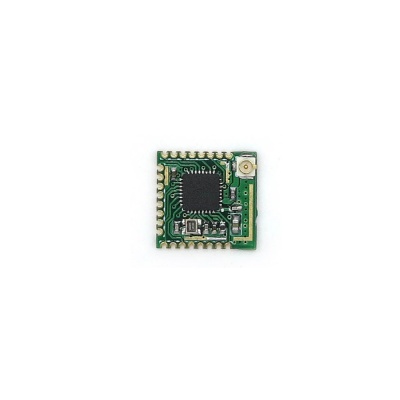
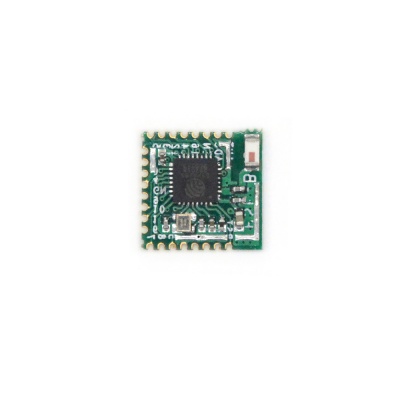
Technical Specifications
Core Processor
- Chip: ESP8285 (ESP8266 + 1MB integrated flash)
- Architecture: 32-bit Tensilica L106 RISC processor
- Clock Speed: 80MHz (can be overclocked to 160MHz)
- Flash Memory: 1MB integrated flash memory
- RAM: 96KB data RAM, 64KB instruction RAM
WiFi Specifications
- Standard: IEEE 802.11 b/g/n/d/e/i/k/r
- Frequency: 2.412GHz - 2.484GHz
- Modes: STA/AP/STA+AP
- Security: WEP/WPA-PSK/WPA2-PSK
- Encryption: WEP64/WEP128/TKIP/AES
Power Specifications
- Operating Voltage: 3.3V
- Operating Current:
- Active: ~70mA average, 200mA peak
- Standby: <200µA
- Deep Sleep: 0.5µA
- Transmit Power:
- 802.11b: +20dBm ±2dBm
- 802.11g: +17dBm ±2dBm
- 802.11n: +14dBm ±2dBm
Interface Capabilities
- GPIO Pins: 9 available GPIO pins
- UART: Full duplex, up to 921600 bps
- SPI: Master/Slave mode
- I2C: Master/Slave mode
- PWM: Software PWM on any GPIO
- ADC: 1 channel, 0-1V input range
Applications
IoT Applications
- Smart Home: Light switches, sensors, thermostats
- Industrial IoT: Remote monitoring and control
- Agricultural: Soil moisture, weather stations
- Security: Door sensors, motion detectors
- Energy: Smart meters, power monitoring
Communication Applications
- Serial-to-WiFi: Convert UART devices to WiFi
- Wireless Bridge: Connect legacy devices to WiFi
- Data Logger: Remote data collection and transmission
- Remote Control: WiFi-enabled device control
- Telemetry: Sensor data transmission
Development Applications
- Prototyping: Quick WiFi connectivity for projects
- Educational: Learning IoT and WiFi programming
- Maker Projects: DIY smart devices
- Research: Wireless sensor networks
- Testing: WiFi protocol development
Programming and Development
Firmware Options
- AT Commands: Default firmware with AT command set
- Arduino IDE: Program using Arduino-style code
- ESP-IDF: Espressif’s official development framework
- MicroPython: Python-based firmware
- NodeMCU: Lua-based firmware
Development Tools
- Arduino IDE: Popular choice for beginners
- PlatformIO: Professional IDE with advanced features
- ESP Flash Tool: Official flashing utility
- esptool.py: Command-line flashing tool
Programming Interface
- UART Programming: Standard method using RX/TX pins
- OTA Updates: Over-the-air firmware updates
- Debug Interface: Serial debugging capabilities
- GPIO Programming: Direct pin control
Pin Configuration
Standard GPIO Pins
- GPIO0: Boot mode selection, general I/O
- GPIO2: UART1_TX, general I/O (boot strapping)
- GPIO4: General I/O
- GPIO5: General I/O
- GPIO12-16: General I/O pins
- ADC: Analog input (0-1V)
Special Function Pins
- EN: Chip enable (active high)
- RST: Reset pin (active low)
- RX/TX: UART communication
- VCC: 3.3V power supply
- GND: Ground connections
Advantages
Design Benefits
- Integrated Flash: No external flash memory required
- Compact Size: Minimal PCB footprint
- Low Power: Excellent for battery-powered applications
- Cost Effective: Affordable WiFi connectivity solution
Technical Benefits
- Dual Core: WiFi and application processing
- Rich Interfaces: Multiple communication protocols
- Flexible Antenna: Multiple antenna options
- Robust Protocol: Industrial-grade WiFi implementation
Development Considerations
Power Management
- 3.3V Supply: Requires regulated 3.3V power
- Current Spikes: Handle 200mA peak current
- Sleep Modes: Utilize deep sleep for battery applications
- Power Sequencing: Proper startup sequence required
RF Considerations
- Antenna Placement: Keep antenna clear of metal
- Ground Plane: Proper PCB ground plane design
- Impedance Matching: 50Ω antenna traces
- Certification: Consider regulatory requirements
Programming Tips
- Boot Mode: GPIO0 and GPIO2 control boot mode
- Flash Size: 1MB flash limits application size
- Memory Management: Efficient use of limited RAM
- Watchdog: Implement proper watchdog handling
Common Applications Examples
Smart Switch
// Basic WiFi switch control
#include <ESP8266WiFi.h>
#include <ESP8266WebServer.h>

const int relayPin = 5;
ESP8266WebServer server(80);

void setup() {
  pinMode(relayPin, OUTPUT);
  WiFi.begin("SSID", "password");
  server.on("/on", []() {
    digitalWrite(relayPin, HIGH);
    server.send(200, "text/plain", "ON");
  });
  server.begin();
}
Sensor Data Logger
// Temperature sensor with WiFi reporting
#include <ESP8266WiFi.h>
#include <ESP8266HTTPClient.h>

void setup() {
  WiFi.begin("SSID", "password");
}

void loop() {
  float temp = readTemperature();
  sendToServer(temp);
  ESP.deepSleep(60e6); // Sleep 1 minute
}
Tags
itead, psf, esp8285, wifi, iot, wireless, uart, gpio, pwm
Notes
These ITEAD PSF modules provide an excellent entry point into ESP8285-based IoT development. The integrated flash memory eliminates the need for external storage, while the compact form factor makes them ideal for space-constrained applications. The choice between PSF-A85 (flexible antenna options) and PSF-B85 (built-in antenna) depends on specific application requirements and PCB design constraints.